 Do you have any questions?
-professor El-Menshawy: Practical training on evacuation plans enhances the university's readiness to deal with emergencies
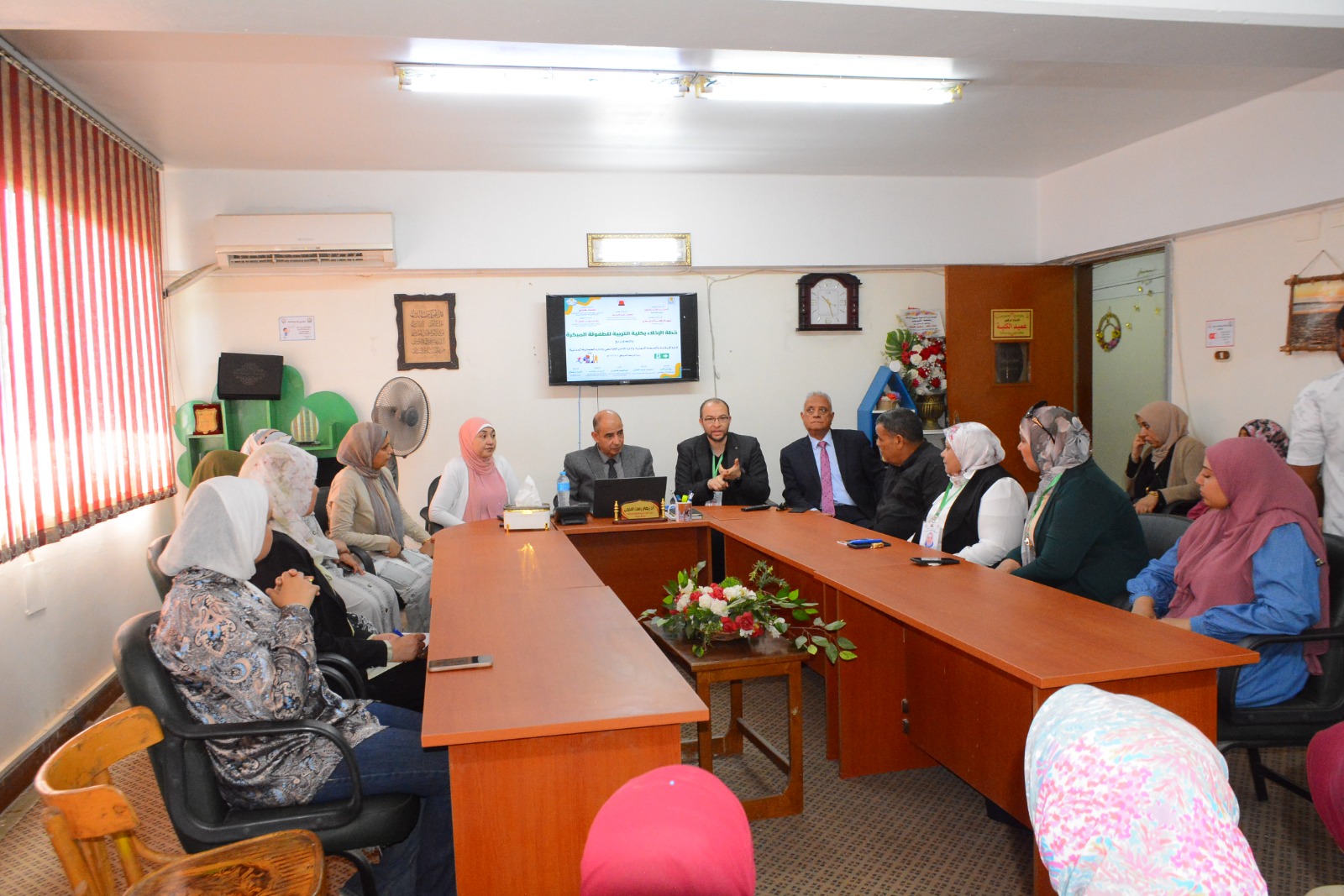
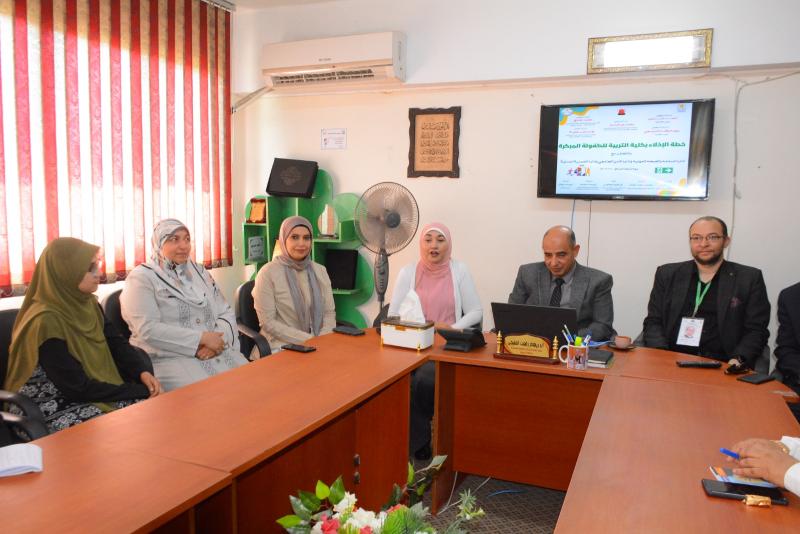
Under the auspices of Professor El-Menshawy, President of Assiut University, the Vice Deanship of the Faculty of Early Childhood Education for Community Service and Environmental Development organized an event to train on the implementation of the "Evacuation Plan" and its practical application within the college, within the framework of spreading the culture of occupational safety and health, raising awareness of civil protection mechanisms, and raising the readiness of the faculty's staff to deal with emergencies. The event was held under the supervision of Dr. Mohamed Adawi, Vice President for Community Service and Environmental Development, Dr. Reham Refaat Al-Meligy, Dean of the Faculty, and Dr. Wafa Maher Attia, Vice President of the College for Community Service and Environmental Development Affairs.
Professor El-Menshawy, President of Assiut University, stressed that the university is keen to consolidate the culture of occupational safety and health, as one of the basic elements to provide a safe and sustainable educational and work environment, pointing out that raising the readiness of colleges and university units to deal with various emergencies is an important part of the
institutional development system pursued by the university. He added that practical training and realistic simulations of evacuation plans contribute to enhancing awareness, raising the efficiency of emergency response, and consolidating a culture of responsibility among all university employees, in a way that keeps pace with the best Security and safety practices.
The event came in cooperation between the Occupational Safety and Health Department, Civil Protection, and the University Security Department, under the supervision of Dr. Mohamed Abdel Basit, Supervisor of the Occupational Safety and Health Department in the university sectors and university hospitals, Major General Ibrahim Anous, Advisor to the President of the University for Security, and Mr. Momen Faqir, Director General of the University Security Department, and in the presence of Dr. Ghada Suwaifi, Vice Dean for Education and Student Affairs, Eng. Shaimaa Mohamed Qutb, Acting Facilitator of the Work of the Director of the Occupational Safety and Health Department, and Mr. Mohamed Abdel Aal, Supervisor of Protection The Civil Society at the University, and Mr. Hossam El-Din Galal, Secretary of the Faculty, in addition to the participation of faculty members and their assistants, the faculty employees, and a number of employees in the Occupational Safety and Health Department, Civil Protection, and University Security.
Dr. Mohamed Adawi, Vice President for Community Service and Environmental Development, stressed that the university is keen to implement continuous training and awareness programs to consolidate the culture of security and safety, and raise awareness of risk management and proper handling of crises, in a way that contributes to providing a safe university environment. He explained that the event included the introduction of the scientific foundations of the evacuation plan, the mechanisms for dealing with emergencies, and the procedures to be followed when crises occur, in addition to introducing emergency exits, gathering points, and the roles of evacuation teams, stressing that preventive awareness represents the first line of defense to keep individuals safe on campus.
For her part, Dr. Reham Rifaat Al-Meliji, Dean of the College, explained that the College of Early Childhood Education pays great attention to consolidating the concepts of security and safety among all its members, by organizing seminars, training programs, and practical applications periodically, to enhance the college's readiness to deal with various emergencies, and to create a safe educational environment that complies with quality and safety standards.
Dr. Mohamed Abdel Basit, Supervisor of the Occupational Safety and Health Department in the university sectors and university hospitals, pointed out that spreading the culture of safety and prevention is one of the main axes that the department is working to consolidate within the university community, through the implementation of training programs, awareness seminars, and periodic evacuation plans aimed at raising the efficiency of emergency response, stressing that adherence to safety measures is a collective responsibility that requires the cooperation of all university employees to preserve lives and property and achieve the highest standards of security and safety.
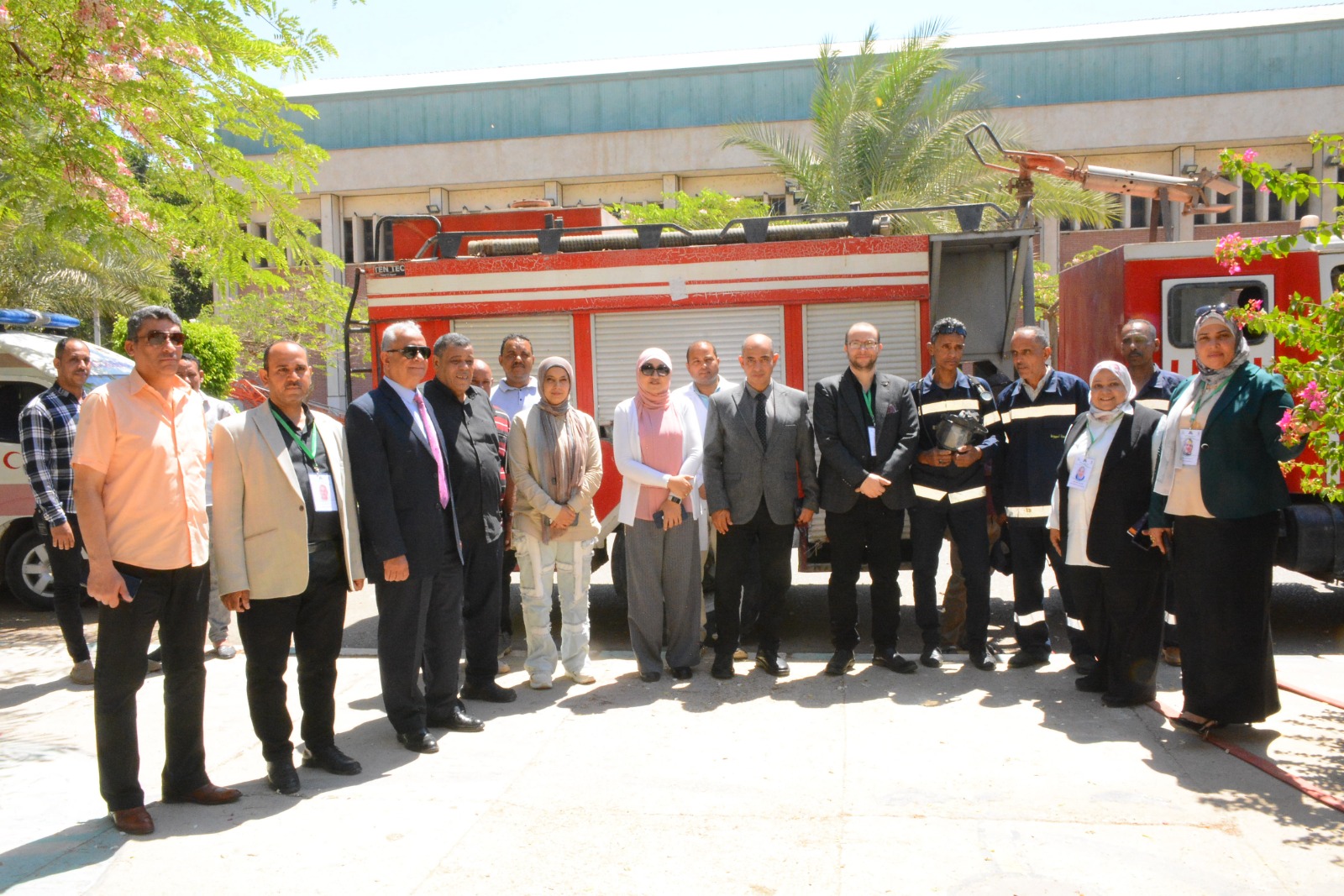
Major General Ibrahim Anous, Advisor to the President of the University for Security, explained that advance preparedness to face emergencies is one of the main pillars of the university security system, pointing out that the success of evacuation plans depends on the clarity of roles, speed of response, and adherence to the organized instructions, while introducing the university's employees to the mechanisms of safe behavior and how to properly use fire extinguishers, in a way that contributes to reducing risks and strengthening the security and safety system according to the best standards.
Mr. Mohamed Abdel Aal, Supervisor of Civil Protection at the University, also stressed that calm and self-control in the event of any emergency is the most important factor in the success of evacuation operations, stressing the need to adhere to the instructions of the evacuation and civil protection teams, and to follow the specified routes and emergency exits, in order to ensure the safety of everyone and reduce the effects of crises.
The event concluded with the implementation of the practical application of the evacuation plan, with the aim of measuring the readiness of the college and its affiliates to deal with emergency situations, and to ensure the efficiency of evacuation procedures and the safety of emergency routes and exits. The application witnessed the evacuation of the college building in an orderly manner according to the approved plan, with the participants adhering to the instructions of the evacuation and civil protection teams, and heading to the designated gathering point, which reflected the level of awareness and discipline among the college employees, and stressed the importance of practical training in enhancing the speed of emergency response and consolidating the culture of prevention and safety within the university community.