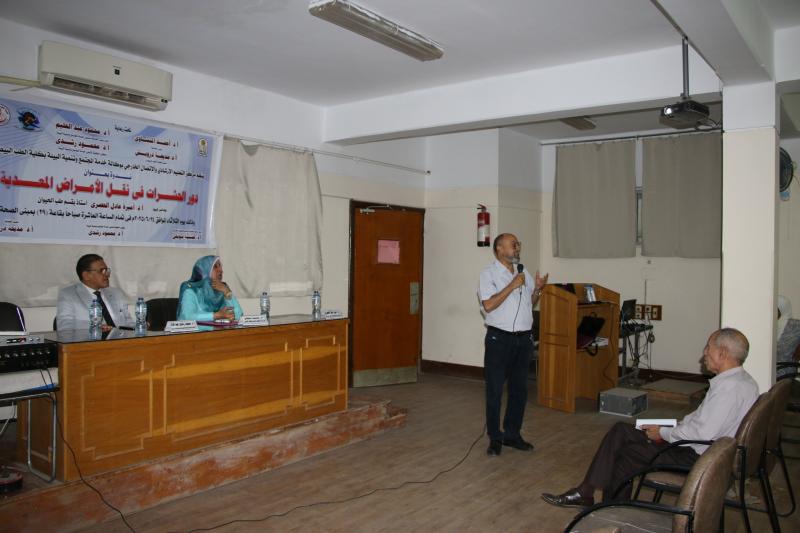
اخر موعد للتسجيل للفصل الصيفى
حيث سيتم غلق باب التسجيل للفصل الصيفى غدا


Tallaga cheese is the most popular type of white soft cheese in Egypt. Cronobacter sakazakii is an opportunistic foodborne pathogen that poses a threat to the health of almost every age group, with a particular emphasis on neonates and infants. Essential oils (EOs), such as olive oil and thyme oil, exhibit a broad-spectrum antibacterial effect. However, few studies have investigated the antibacterial activity of these EOs and their formulated nanoemulsions (NEs)—olive oil nano-emulsions (ONE) and thyme oil nano-emulsions (TNE)—on C. sakazakii in cheese to date. The purpose of this study was to investigate the inhibitory effects of these EOs and their NEs on the development of C. sakazakii during the processing and storage of Tallaga cheese. Additionally, the organoleptic properties of the resulting cheese were evaluated. Herein, ONE and TNE were prepared and characterized using a zetasizer and transmission electron microscopy (TEM). Furthermore, the minimum inhibitory concentrations (MICs) of EOs and NEs were determined using well diffusion assay. Fresh buffalo's milk for the elaboration of Tallaga cheese was inoculated with C. sakazakii at a concentration of 6 log CFU/mL, along with the addition of MICs of either EOs or NEs. The obtained results showed that the MICs were 15 mg/mL (v/v) for either olive oil, thyme oil, ONE and TNE with diameter inhibition zones of 10.3 ± 0.5, 13.3 ± 1.7, 12.3 ± 0.5, and 16 ± 0.8 mm, respectively. In addition, NEs exhibited high antibacterial activities against C. sakazakii in comparison to pure EOs. Particularly, the strongest antibacterial effect toward C. sakazakii was reported with TNE during manufacturing and storage of Tallaga cheese. Overall, these results suggest that thyme and its NEs have the potential to prevent bacterial contamination by C. sakazakii in the dairy industry.
This study evaluated the application of chitosan/polyvinyl alcohol/graphene oxide/nano titanium oxide
(CS/PVA/GO/nano TiO2) hydrogels for bone defect reconstruction in dogs. Dogs were subjected to middiaphyseal
circular bone defects (0.8 cm2) in the radius bones. Bone defects were implanted with the
hydrogel in the treated group (n = 9), while the control group were subjected to spontaneous healing
(n = 9). Dogs were subjected to clinical, radiographic, and scanning electron microscopy (SEM)
evaluations at 15-, 30-, and 45-days post-surgery. Dogs in the treated group recorded no lameness by
the end of the third week post-surgery, while dogs in the untreated group still exhibited lameness of
grade 1. There was a significant decrease (p o 0.05) in the cortical defect (mm) of the treated group
(5.46 0.17 and 1.45 0.13) compared with the control group (7.57 0.05 and 7.59 0.06) at 30- and
45-days post-surgery, respectively. The depth of the bone defects (mm) decreased significantly (p o 0.05)
in the treated group (2.26 0.12 and 0.008 0.002) compared with the untreated group (4.05 0.05
and 2.16 0.07) at 30- and 45-days post-surgery, respectively. Throughout the period of study, there was
a significant increase (p o 0.05) in the radiographic density of the bone defects (px) in the treated group
(474 17.88) compared with that in the control group (619.6 6.85). SEM results revealed complete
closure of the bone defects in the treated group. Thus, implantation of bone defects with the CS/PVA/
GO/nano TiO2 hydrogel represents a promising bone graft substitute for accelerating bone healing.
Background
Rabbit hemorrhagic disease (RHD) is an acute infectious disease that damages the rabbit industry by producing significant mortality rates in young and adult rabbits. RHD is better controlled by vaccination.
Objective
The current study's goal was to prepare and evaluate the immuno-enhancing effect of montanide ISA70 and aluminum hydroxide (Al(OH)3) gel incorporated within the inactivated RHDV2 vaccine and assess the vaccine's protective efficacy against the homologous and heterologous local RHDV2 strains in rabbits.
Methods
Inactivated RHDV vaccines were prepared using Montanide ISA70 oil or Al(OH)3 gel adjuvants and submitted to sterility, safety, and potency tests. 200 rabbits were equally divided into 4 groups: G1 (control), G2 (vaccinated with gel-incorporated vaccine), G3 (vaccinated with montanide-incorporated vaccine), and G4 (vaccinated with gel- and montanide-incorporated …
The joint impact of tadalafil (Cilais) as a pharmaceutical residue and microplastics on fish is not well comprehended. The current study examined haematological, biochemical, and antioxidant parameters, along with immunohistochemical and histological indications in tilapia (Oreochromis niloticus) after being exposed to tadalafil, polyethylene microplastics (PE-MPs), and their mixtures for 15 days. The fish were distributed into 1st group control group (The fish was maintained in untreated water without any supplements); 2nd group exposed to 10 mg/L PE-MPs;3rd group exposed to 20 mg/l tadalafil (Cilais); 4th group exposed to 20 mg/l tadalafil (Cilais) + 10 mg/LPE-MPs (in triplicate). The levels of creatinine, uric acid, glucose, AST, ALT, and albumin in fish treated with tadalafil alone or in combination with PE-MPs were significantly higher than those in the control group. Fish exposed to PE-MPs, tadalafil, and …